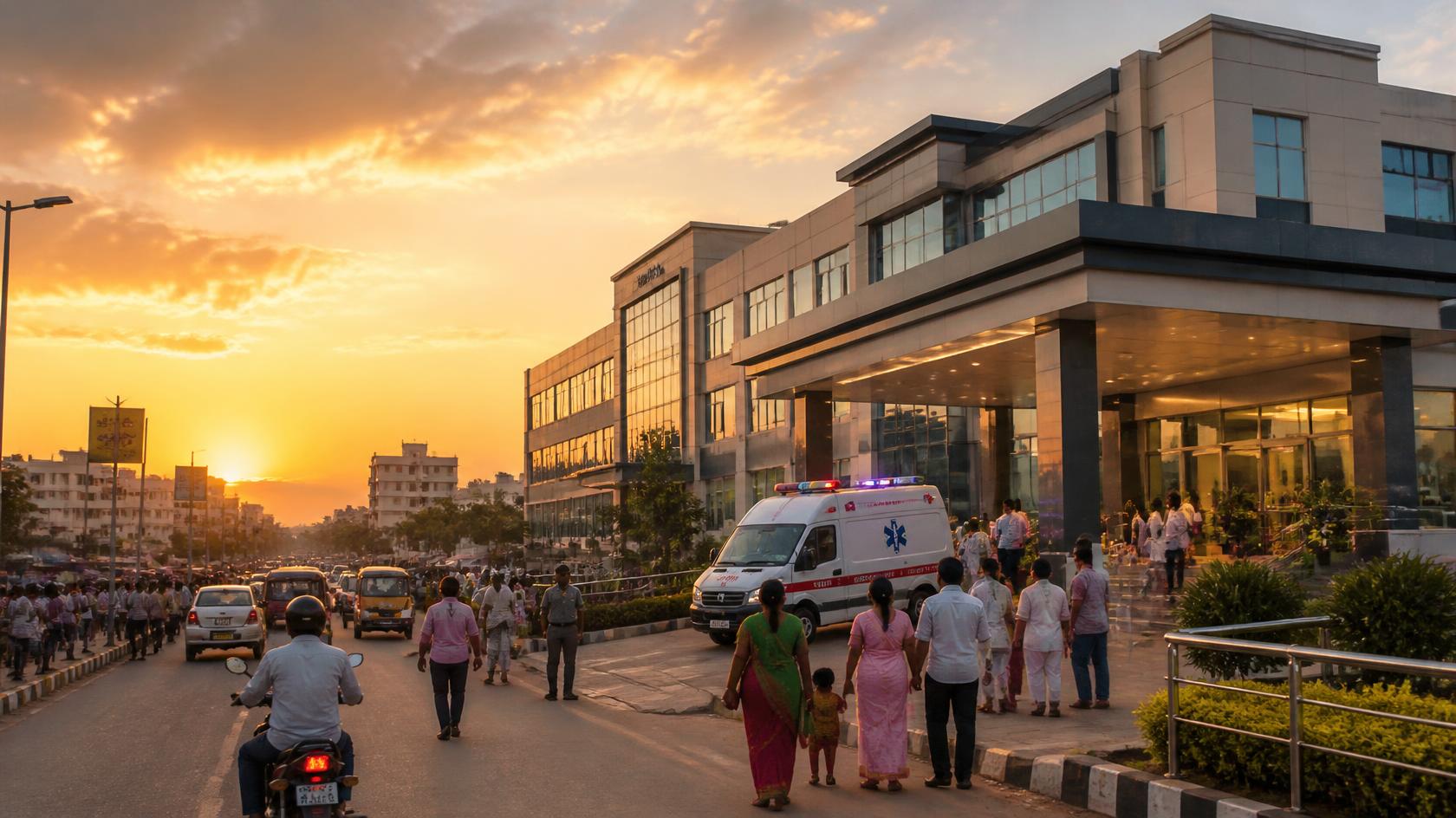
For years, discussions about India's healthcare growth have centred on its major metropolitan cities, and understandably so, since that is where large hospital chains, advanced diagnostics, and specialist care have traditionally concentrated. That focus is shifting fast, and the shift is now backed by hard numbers rather than just anecdotal observation. Healthcare demand in Tier II and Tier III cities is now projected to grow at 16 to 18 percent annually over the next few years, comfortably outpacing the 12 to 14 percent growth rate seen in metro markets.
This is not simply a matter of smaller cities catching up from a low base, although that is part of the story. It reflects a genuine structural change in where India's population, purchasing power, and disease patterns are concentrated, and healthcare businesses that recognise this shift early are likely to capture disproportionate share as the market develops.
Population growth and policy reach working together
Population movement is one clear driver behind this shift. Tier II cities alone are expected to add 40 million new residents by FY27, bringing with them a corresponding rise in demand for hospitals, diagnostics, pharmacies, and specialist care that simply did not exist locally a decade ago. This population growth is being driven by a combination of factors, including urban migration for employment, the expansion of educational institutions into smaller cities, and the broader decentralisation of economic activity away from the largest metros.
Government schemes are helping close the access gap as well, rather than population growth outpacing infrastructure entirely. As of 2025, roughly 70 percent of hospitals in these smaller cities are already empanelled under Ayushman Bharat, meaning a large share of the population in these regions now has a genuine pathway to affordable, quality care close to home rather than having to travel to a metro city for treatment, which was previously the default option for anything beyond routine primary care.
Lifestyle diseases are changing what local care needs to look like
This shift is closely connected to a broader change in the kinds of illnesses Indian healthcare providers are treating, and that change is not confined to metro cities. Lifestyle diseases, driven by factors such as high cholesterol, high blood pressure, obesity, and poor diet, now account for roughly half of all spending on in patient beds nationally, and this trend is playing out in smaller cities just as much as in large ones, following broader shifts in diet, activity levels, and urbanisation.
These conditions require ongoing, specialised management rather than one off treatment, meaning a patient with diabetes or hypertension needs consistent, local access to a specialist over years, not just a single hospital visit. Patients increasingly expect that kind of care to be available locally rather than requiring a trip to a distant city every time they need a follow up consultation or a medication adjustment, and this expectation is directly shaping where hospital groups choose to build new specialist capacity.
Private hospitals are expanding to meet the demand directly
Private hospital groups have taken clear note of this trend and are actively expanding capacity outside of metro markets rather than concentrating exclusively on flagship city locations. India's private hospitals are expected to add over 4,000 new beds in FY26 alone, backed by an investment of roughly 1.34 billion dollars, continuing a trend of capacity expansion that has been building for several years and increasingly directed at Tier II and Tier III markets specifically, where competition for patients is currently lower and where hospital groups can often build meaningful local market share more quickly than in saturated metro markets.
What businesses should consider when expanding into these markets
For healthcare businesses evaluating where to expand next, a few practical considerations are worth keeping in mind. Staffing tends to be a genuine challenge in smaller cities, since specialist doctors and nurses often prefer to remain in or near metro areas, so successful expansion frequently requires investment in local training partnerships or attractive relocation packages. Pricing also needs careful calibration, since disposable income levels differ meaningfully between metro and non metro markets, even as demand for quality care converges. Finally, insurance penetration and Ayushman Bharat empanelment status matter enormously in these markets, since a large share of the addressable patient base in Tier II and Tier III cities relies on scheme coverage rather than fully private payment.
Which specialities are seeing the strongest demand outside metros
Not all medical specialities are growing at the same pace in Tier II and Tier III cities, and understanding which ones are leading the way is useful for any business deciding where to focus expansion. Cardiology, given the strong connection between lifestyle diseases and heart conditions, tends to see particularly strong demand growth in these markets, alongside diabetology and endocrinology, both closely tied to the rising prevalence of diabetes across smaller Indian cities. Orthopaedics has also seen substantial growth, partly reflecting an ageing population and partly reflecting rising rates of diagnosed joint related conditions as diagnostic access has improved locally. Maternal and child health services remain consistently strong across all city tiers, representing a stable baseline of demand that most hospital groups build their initial smaller city presence around before expanding into more specialised service lines.
Diagnostics as a category, rather than a single speciality, has also expanded particularly quickly in smaller cities, since diagnostic centres require considerably less capital investment than a full hospital and can be established relatively quickly to serve local demand, often serving as an early market entry point before a company commits to building fuller hospital infrastructure in a given city.
The competitive landscape in smaller cities looks different from metros
One important nuance for businesses to understand is that the competitive dynamics in Tier II and Tier III cities often differ meaningfully from what they are accustomed to in metro markets. In many smaller cities, the existing competition consists primarily of smaller, often single doctor owned nursing homes and clinics rather than large organised hospital chains, meaning a well capitalised, professionally run hospital entering these markets can sometimes establish a dominant local position more quickly than would be possible in an already crowded metro market with multiple established large chains competing directly. That said, this also means local relationships, trust built with the community over time, and understanding of local patient preferences and price sensitivity matter considerably more in these markets than brand recognition alone, which tends to carry more relative weight in metro markets where patients are more accustomed to evaluating and comparing large hospital brands.
The role of local talent development
Given the staffing challenges discussed earlier, several hospital groups expanding into Tier II and Tier III cities have found success by investing directly in local talent pipelines rather than relying purely on relocating staff from metro cities. This has included partnerships with local nursing colleges to create structured placement pathways, sponsoring local students through medical education in exchange for a service commitment upon graduation, and building continuing education programmes that allow doctors already based in smaller cities to gain specialist certifications without relocating. This kind of grow your own talent strategy tends to produce more stable, long term staffing than relying primarily on staff who may view a posting in a smaller city as temporary before returning to a metro market, and it also builds goodwill with the local community, which can translate into stronger patient trust and word of mouth reputation over time.
Frequently asked questions
How fast is healthcare demand growing in Tier II and Tier III Indian cities?
Healthcare demand in these cities is projected to grow at 16 to 18 percent annually, compared to 12 to 14 percent in metro cities.
How many hospitals in smaller Indian cities are covered under Ayushman Bharat?
As of 2025, roughly 70 percent of hospitals in Tier II and Tier III cities are empanelled under Ayushman Bharat.
How much is India's population in Tier II cities expected to grow?
Tier II cities are expected to add 40 million new residents by FY27.
Are private hospital chains expanding into smaller Indian cities?
Yes. India's private hospitals are expected to add over 4,000 new beds in FY26 alone, with an investment of roughly 1.34 billion dollars, much of it directed toward non metro expansion.
Why are lifestyle diseases important to healthcare demand in smaller cities?
Lifestyle diseases now account for roughly half of all in patient bed spending nationally, requiring ongoing, local specialist care rather than one time treatment, which is reshaping demand patterns even outside major metros.
A window that will not stay open indefinitely
It is worth noting that the current window of relatively lower competition in many Tier II and Tier III markets is unlikely to remain wide open indefinitely. As more hospital groups recognise and act on the same growth data outlined throughout this piece, competitive intensity in these markets is likely to increase over the coming years, gradually converging toward the more contested dynamics already familiar in metro markets. Businesses that establish credible, well run local operations earlier are likely to benefit from stronger patient loyalty and brand recognition by the time that increased competition arrives, making the current period a particularly meaningful time to act rather than wait.
Key takeaways
Tier II and Tier III cities are no longer a secondary consideration for Indian healthcare businesses, they represent a fast growing, currently underserved market with real purchasing power and a government backed push toward better local access. Organisations that build thoughtfully for these markets, with the right staffing, pricing, and scheme partnerships, are positioned to capture a growth curve that is currently outpacing even the strong growth seen in India's established metro healthcare markets.