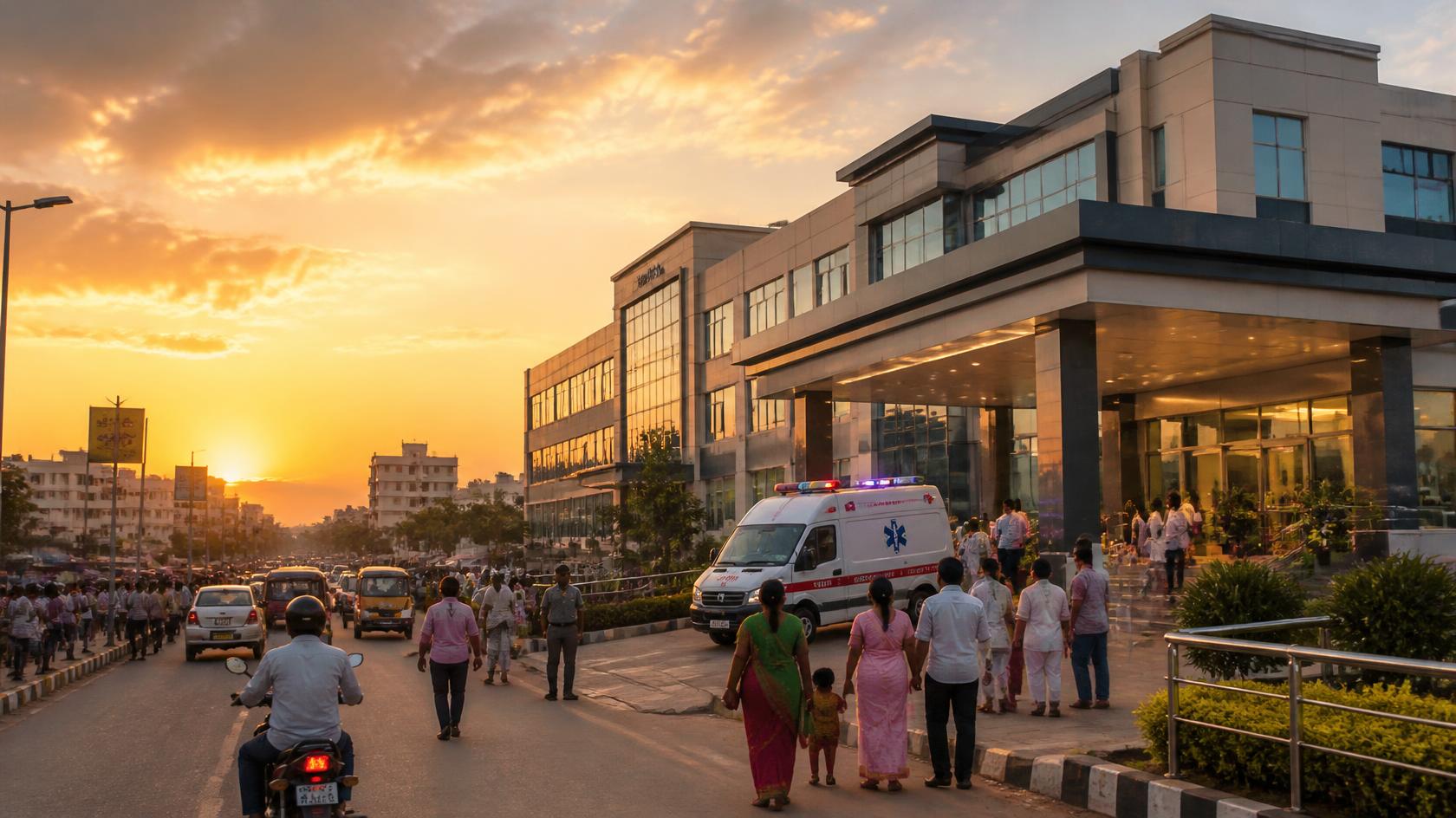
India's healthcare sector has quietly become one of the country's largest and fastest growing industries, and the scale of that growth is worth pausing on. In 2016, the sector was valued at roughly 110 billion dollars. By 2023, that number had more than tripled to 372 billion dollars, and industry estimates now put the 2025 figure at approximately 638 billion dollars. This represents a compound annual growth rate of over 22 percent, a pace that few other sectors in the Indian economy can match, and one that puts healthcare firmly among the country's most important growth stories over the next decade.
For context, a growth rate this size does not happen by accident. It reflects deep structural shifts in how Indians earn, age, get sick, and choose to spend money on their own wellbeing. Understanding those shifts is useful whether you are running a hospital, building a health tech product, investing in the space, or simply trying to make sense of where Indian healthcare is headed.
What is driving the growth
A combination of factors is at play, and they tend to reinforce each other rather than operate in isolation. Rising household incomes are giving more families the ability to spend on quality care rather than deferring treatment or settling for the cheapest available option. An ageing population is creating steady, long term demand for treatment and management of age related conditions, from cardiac care to orthopaedics to chronic disease management, none of which can be delayed the way elective procedures sometimes are.
Government spending has also increased significantly, with healthcare's share of GDP expected to rise from 3.3 percent in 2022 to around 5 percent by 2030. That is a meaningful commitment from the public sector, and it tends to have a multiplier effect, since public investment in primary care infrastructure often creates the referral pipeline that feeds secondary and tertiary private facilities.
Changing attitudes toward preventive healthcare are another underappreciated driver. A generation ago, most Indian households engaged with the healthcare system only when something went visibly wrong. Today, routine health checkups, diagnostic screening, and wellness subscriptions are becoming normalised, particularly in urban and increasingly in semi urban India, which expands the addressable market well beyond acute care.
Innovation across hospitals, pharma, and diagnostics
Hospitals are investing in advanced equipment and specialised departments, moving away from being generalist facilities toward centres of excellence in areas such as oncology, cardiac sciences, and organ transplantation. Pharmaceutical companies are expanding both domestic manufacturing and exports, with India's pharmaceutical exports projected to grow ten to fifteen times by FY47, from around 30.38 billion dollars currently to a projected 350 billion dollars. Diagnostic chains are bringing testing closer to smaller towns and cities, shortening the time between a symptom appearing and a diagnosis being confirmed, which has knock on effects for treatment outcomes across the board.
Digital health is layering on top of all of this. The Indian digital health market was valued at roughly 8.79 billion dollars in 2024 and is expected to reach 47.8 billion dollars by 2033, growing at a compound annual rate of 17.67 percent. That includes everything from electronic health records to remote monitoring tools to AI assisted diagnostics, and it is increasingly treated as core infrastructure rather than an optional add on.
Healthcare as one of India's largest employers
It is easy to focus purely on revenue figures and miss the employment story underneath them. As of FY24, the Indian healthcare sector was already one of the country's largest employers, with a total workforce of 7.5 million people. Progress in telemedicine, virtual assistants, and data analytics is expected to create an additional 2.7 to 3.5 million new technology focused jobs within the sector, roles that did not exist in Indian healthcare a decade ago, from remote monitoring specialists to clinical data analysts.
This matters for two reasons. First, it means the growth of the sector is not just a story for investors and large hospital chains, it is directly connected to livelihoods across the country. Second, a growing, increasingly specialised workforce becomes a competitive advantage in its own right, one of the reasons global healthcare companies continue to look at India not just as a market to sell into but as a place to build.
Where the growth is coming from geographically
Much of the historical narrative around Indian healthcare has focused on metro cities, and for good reason, since that is where large hospital chains, advanced diagnostics, and specialist care have traditionally concentrated. That is changing quickly. Healthcare demand in Tier II and Tier III cities is now growing faster than in metro markets, and private hospital groups are actively building capacity in these smaller cities rather than only expanding their flagship metro locations. This geographic broadening is one of the more important, and sometimes overlooked, components of the sector's overall growth rate.
What this means for different stakeholders
For investors, the sector's sustained double digit growth, combined with favourable government policy on foreign direct investment, makes healthcare one of the more defensible long term plays in the Indian economy, less exposed to short term consumer sentiment swings than many other consumption categories. For hospital operators and healthcare businesses, the message is one of scale and specialisation: the market is large enough to reward focused, well run operations, whether that focus is on a particular speciality, a particular price point, or a particular geography. For patients, the practical upshot is more choice, more competition on quality and price, and steadily improving access, even if the pace of improvement varies significantly by region.
How India's growth compares on the global stage
It is worth putting India's healthcare growth rate in a global context, because a 22 percent compound annual growth rate is unusual by international standards. Mature healthcare markets in North America and Western Europe typically grow in the low to mid single digits annually, constrained by already high per capita spending, ageing but slow growing populations, and healthcare systems that are largely built out. India's growth looks more like the early expansion phase that markets such as China went through roughly a decade or two ago, where a large, still developing population base combines with rapidly rising incomes to produce a genuinely large increase in absolute healthcare spending, not just a percentage increase off a small base.
This distinction matters for how global healthcare companies think about India. A pharmaceutical company or medical device manufacturer is not simply looking at India as one growing market among many, they are looking at a market whose absolute size, in dollar terms, is compounding quickly enough that a company with a strong position today could find itself sitting on a genuinely large regional business within five to seven years, even without dramatically changing its strategy. That is a different kind of opportunity than incremental growth in an already mature market, and it explains why so much international capital, discussed in more detail in our piece on foreign direct investment in Indian healthcare, continues to flow into the sector.
How to think about risk alongside the opportunity
None of this means the growth is guaranteed to be smooth or evenly distributed. Regulatory changes, such as the GST reforms discussed elsewhere on this blog, can shift margins and pricing dynamics with relatively little notice. Infrastructure gaps, particularly around skilled healthcare workforce availability, mean that growth in demand does not always translate immediately into growth in delivered care, since supply side constraints can create real bottlenecks even when funding and patient demand are both present. Currency fluctuations also matter for foreign investors and for domestic companies that rely on imported equipment or active pharmaceutical ingredients, since input costs can move independently of the underlying demand trend.
For businesses building in this space, the practical implication is to plan with reasonable optimism about the overall direction of the sector while still building in genuine operational resilience, sufficient working capital, flexible staffing models, and diversified supplier relationships, rather than assuming that strong headline growth numbers translate automatically into smooth, predictable year on year execution at the level of an individual business.
Frequently asked questions
How big is India's healthcare sector expected to be by 2025?
Industry estimates put the sector at approximately 638 billion dollars by 2025, up from around 110 billion dollars in 2016, reflecting a compound annual growth rate of roughly 22 percent over that period.
What is driving India's healthcare market growth?
The main drivers are rising household incomes, an ageing population, increased government healthcare spending, growing awareness of preventive care, and continued innovation across hospitals, pharmaceuticals, and diagnostics.
Is India's healthcare growth limited to major cities?
No. While metro cities remain important hubs, healthcare demand in Tier II and Tier III cities is currently growing faster than in metro markets, and private hospital chains are actively expanding capacity in these smaller cities.
How many people does the Indian healthcare sector employ?
As of FY24, the sector employed approximately 7.5 million people, and progress in telemedicine and digital health is expected to add another 2.7 to 3.5 million technology focused jobs.
Is India's healthcare spending as a share of GDP increasing?
Yes. Healthcare's share of India's GDP was around 3.3 percent in 2022 and is expected to rise to approximately 5 percent by 2030, reflecting sustained public and private investment.
Key takeaways
India's healthcare sector is not simply growing, it is growing broadly, across hospitals, pharmaceuticals, diagnostics, digital health, and employment, and across geography, from established metro markets into fast developing smaller cities. For businesses evaluating where to invest time and capital, the direction of travel is clear even if the specific opportunities vary by segment. The sector rewards organisations that think in terms of years rather than quarters, and that are willing to build for a patient base that is becoming steadily larger, more informed, and more geographically dispersed.