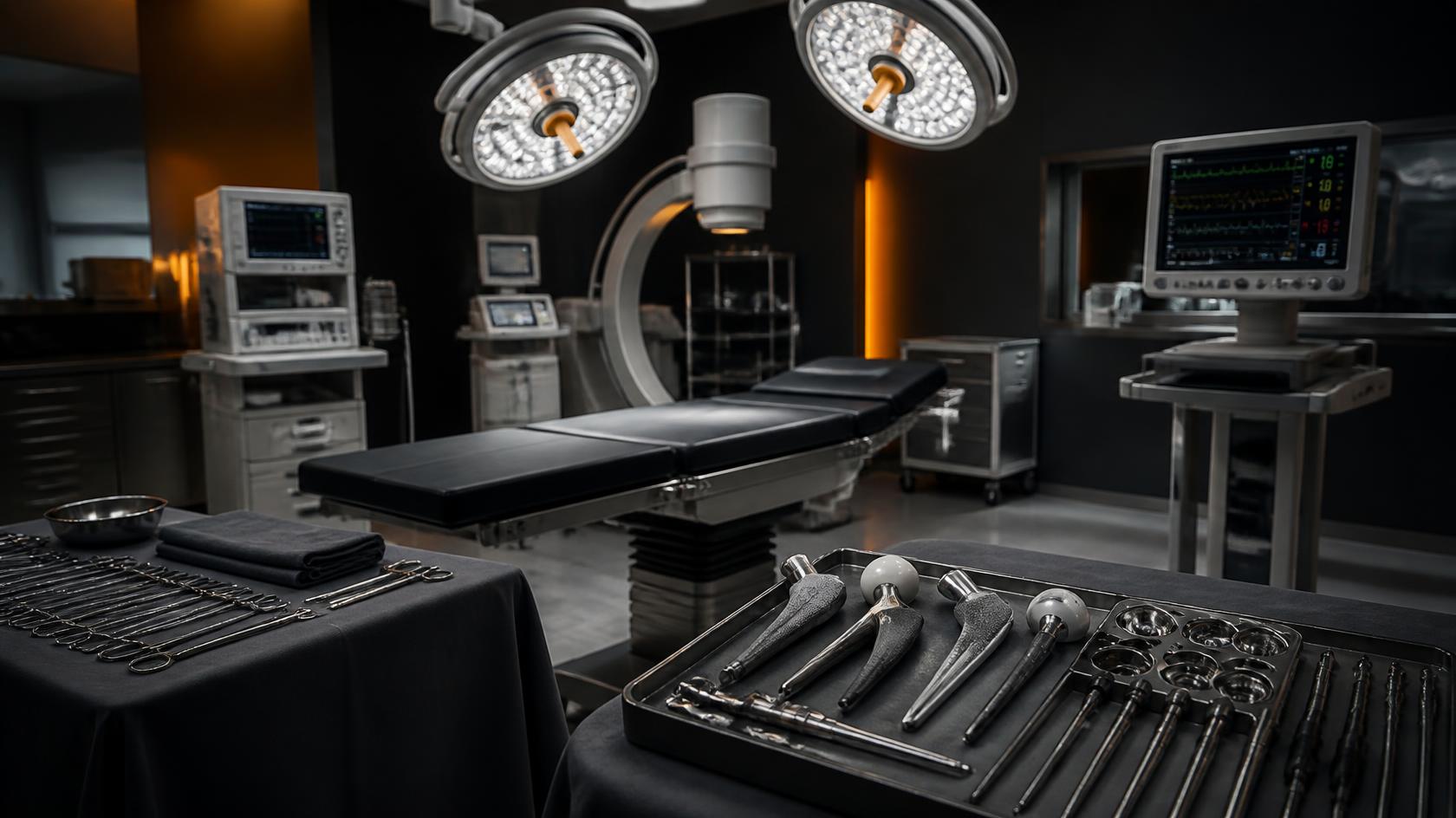
India's medical devices industry has quietly become one of the more promising segments within the broader healthcare economy, one that often gets less attention than hospitals or pharmaceuticals despite growing at a comparable, if not faster, pace. The sector is expected to grow to 4,34,350 crore rupees, or roughly 50 billion dollars, by FY31, powered by rising demand for quality healthcare, rapid technological advancement, and supportive government policy working together across multiple fronts at once.
Tax relief is making devices more affordable in real time
Part of this support has come in the form of direct tax relief, which is unusual in that its effect is felt almost immediately rather than over a period of years. Under the recent GST 2.0 reforms, most medical devices and consumables, including diagnostic kits, reagents, glucometers, medical oxygen, gauze, bandages, surgical gloves, and thermometers, now attract just 5 percent GST, down from a range of 12 to 18 percent previously. This kind of reduction has an immediate effect on affordability, both for hospitals procuring equipment at scale, where the savings compound across large volumes, and for individuals purchasing devices for home use, where even a small price reduction can be the difference between consistent use and inconsistent use of a device such as a glucometer or blood pressure monitor.
Demand is coming from every direction at once
Demand for these products is being driven by several forces working together rather than any single factor. India's healthcare infrastructure is expanding rapidly, with the country needing an additional three million hospital beds, 1.54 million doctors, and 2.4 million nurses to meet its own targets by 2025. Every new bed, every new hospital, and every new diagnostic centre creates fresh demand for equipment and supplies, from basic consumables used in everyday patient care to advanced imaging systems used in specialised diagnostic work.
Beyond hospital infrastructure growth, there is also a broader consumer shift toward preventive and at home health monitoring, particularly for chronic conditions such as diabetes and hypertension, both of which require regular self monitoring using devices like glucometers and blood pressure cuffs. This consumer facing demand represents a meaningfully different market from institutional hospital procurement, with different distribution channels, different price sensitivity, and different branding considerations, but it is growing just as quickly.
Foreign investment continues to flow in steadily
Foreign direct investment is also flowing into this space at a substantial pace. Between April 2000 and June 2025, the hospital and diagnostic centres segment received 12.25 billion dollars in cumulative FDI, while medical and surgical appliances attracted a further 3.96 billion dollars, together making up close to 40 percent of the 40.83 billion dollars in total FDI that has come into India's broader healthcare and pharmaceutical space over that period. This level of sustained foreign investment tends to bring not just capital but also manufacturing expertise, quality standards, and access to international distribution networks, all of which help accelerate the domestic industry's development.
Domestic manufacturing is gaining policy attention too
Alongside foreign investment, there has been a deliberate policy push to build domestic manufacturing capability in medical devices, reducing India's historical reliance on imports for higher end equipment. Initiatives such as MedTech Mitra, launched by the Union Minister of Health and Family Welfare, are specifically aimed at empowering MedTech innovators and advancing healthcare solutions in India, supporting young talent and start ups by refining their research and helping them navigate the regulatory approval process, an area that has historically been a significant bottleneck for smaller domestic device manufacturers trying to bring new products to market.
What this means for businesses in the space
For manufacturers, distributors, and hospital procurement teams, the medical devices sector represents a market that is growing on multiple fronts at once: more patients, more hospital capacity, friendlier tax treatment, and continued investor confidence. Businesses that can offer reliable quality at competitive prices are well placed to benefit from this sustained expansion, particularly if they can serve both the institutional hospital procurement market and the growing consumer market for home monitoring devices, since these two channels are likely to keep growing at somewhat different but complementary rates over the coming years.
Manufacturing versus import: where the industry is headed
A significant part of the medical devices growth story involves a gradual but meaningful shift from import dependence toward domestic manufacturing, particularly for mid complexity devices where India has strong existing engineering and manufacturing capability. Historically, India has imported a large share of its higher end medical devices, including advanced imaging equipment and certain categories of surgical instruments, while being a strong domestic and export manufacturer of simpler consumables and basic diagnostic equipment. Government initiatives, including production linked incentive schemes for medical devices manufacturing, are specifically designed to encourage global device manufacturers to establish local manufacturing operations in India rather than simply exporting finished products into the market.
This shift matters for several reasons beyond simple trade balance considerations. Domestic manufacturing tends to reduce costs over time, since it removes import duties and shipping costs from the final price, and it also builds a more resilient supply chain, reducing India's vulnerability to global supply disruptions of the kind that affected medical device availability during the pandemic. For businesses evaluating opportunities in this space, medical device manufacturing, rather than pure distribution or import, represents an increasingly attractive long term strategic position, particularly for companies able to meet the quality certification requirements needed to supply both domestic hospitals and export markets.
Quality certification and regulatory considerations
For any business entering the medical devices space in India, understanding the regulatory pathway is essential, since medical devices are subject to a different and generally more rigorous approval process than most other consumer or industrial products, given their direct connection to patient safety. The Central Drugs Standard Control Organisation oversees medical device regulation in India, with different classes of devices, ranging from low risk items such as thermometers to high risk implantable devices, subject to correspondingly different levels of regulatory scrutiny before they can be legally sold. Businesses that invest early in understanding and planning for this regulatory pathway, rather than treating it as an afterthought, tend to bring products to market considerably faster than those that attempt to navigate the process reactively after development is already complete, and they also tend to build stronger, more durable relationships with hospital procurement teams who value suppliers with a demonstrated track record of regulatory compliance and consistent product quality over time.
The connected devices opportunity specifically
A particularly fast growing subsegment within medical devices involves connected, internet enabled devices that transmit data directly to a smartphone app or a healthcare provider, rather than requiring a patient to manually record and report readings. Connected glucometers, smart blood pressure monitors, and wearable ECG patches are increasingly popular among urban consumers managing chronic conditions, and they pair naturally with the growth of telemedicine discussed elsewhere on this blog, since a doctor conducting a remote consultation can review a patient's actual recorded readings over recent weeks rather than relying solely on the patient's memory or self reported estimates. As smartphone penetration and telemedicine adoption both continue to rise across India, connected devices represent one of the more promising growth pockets within the broader medical devices category, appealing to both device manufacturers and the health tech platforms that integrate with them.
Frequently asked questions
How big is India's medical devices market expected to become?
The sector is expected to reach approximately 4,34,350 crore rupees, or roughly 50 billion dollars, by FY31.
Did GST on medical devices decrease recently?
Yes. Under GST 2.0, most medical devices and consumables now attract 5 percent GST, down from a range of 12 to 18 percent previously.
How much foreign investment has India's medical devices sector received?
Between April 2000 and June 2025, hospitals and diagnostic centres received 12.25 billion dollars in cumulative FDI, while medical and surgical appliances attracted 3.96 billion dollars.
What is MedTech Mitra?
MedTech Mitra is a government initiative aimed at supporting MedTech innovators and start ups in India by helping refine their research and navigate regulatory approvals, reducing India's reliance on imported medical devices.
What is driving demand for medical devices in India?
Key drivers include rapid hospital infrastructure expansion, growing demand for at home chronic disease monitoring devices, and continued government and foreign investment in the sector.
A market still being defined
Perhaps the most important thing for businesses to understand about India's medical devices market is that it is still being actively shaped by policy, investment, and consumer behaviour simultaneously, rather than settling into a mature, predictable structure. That makes it a genuinely dynamic space to operate in, with real opportunity for companies that move decisively, whether through domestic manufacturing investment, strategic distribution partnerships, or building consumer facing connected device products, to establish a strong position before the market matures further and competitive dynamics become more settled.
Key takeaways
India's medical devices sector sits at the intersection of several powerful trends: expanding hospital infrastructure, falling tax rates, rising consumer demand for home health monitoring, and sustained foreign investment. For businesses evaluating this space, the opportunity extends well beyond large hospital procurement contracts into a genuinely growing consumer market as well.